
Low Temp vs High Temp Dabs
Last updated: June 13, 2026
TL;DR
Low-temp dabs (350-450F) preserve terpene flavour and produce cleaner, smoother vapor at the cost of bigger clouds. High-temp dabs (550-700F) produce big clouds and stronger immediate hits but burn off terpenes and create harsher, char-tasting smoke. For terpene-rich concentrates like live rosin and HTFSE, low temp wins every time. For cheap shatter or extracts you’re just trying to inhale fast, high temp gets the job done. Most experienced dabbers settle around 400-450F as the sweet spot for flavour and effect.
What is the difference between low-temp and high-temp dabs?
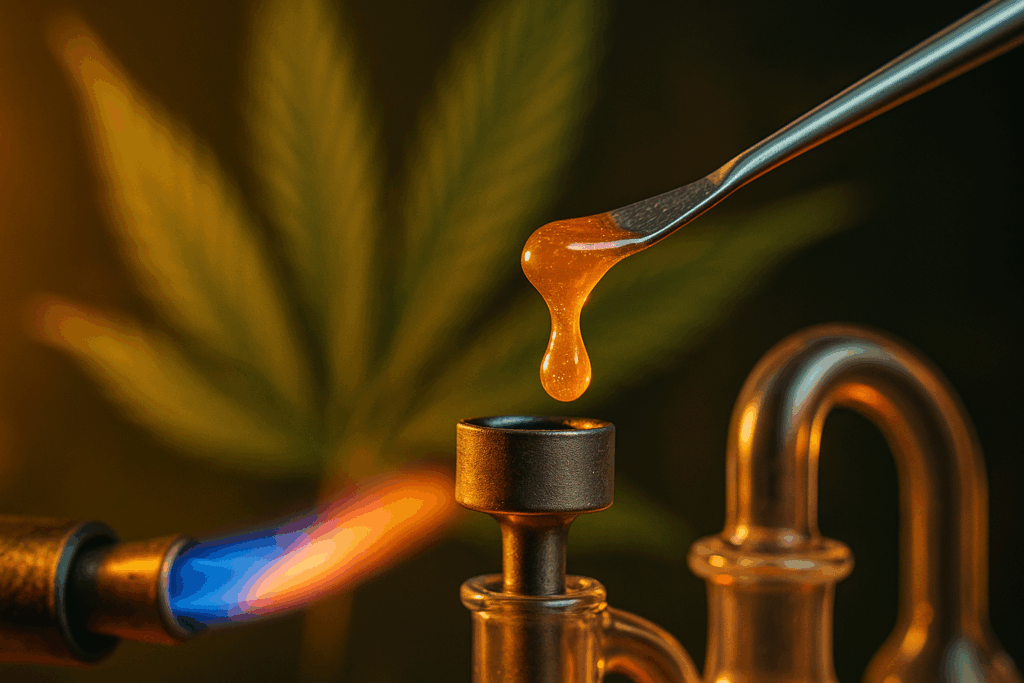
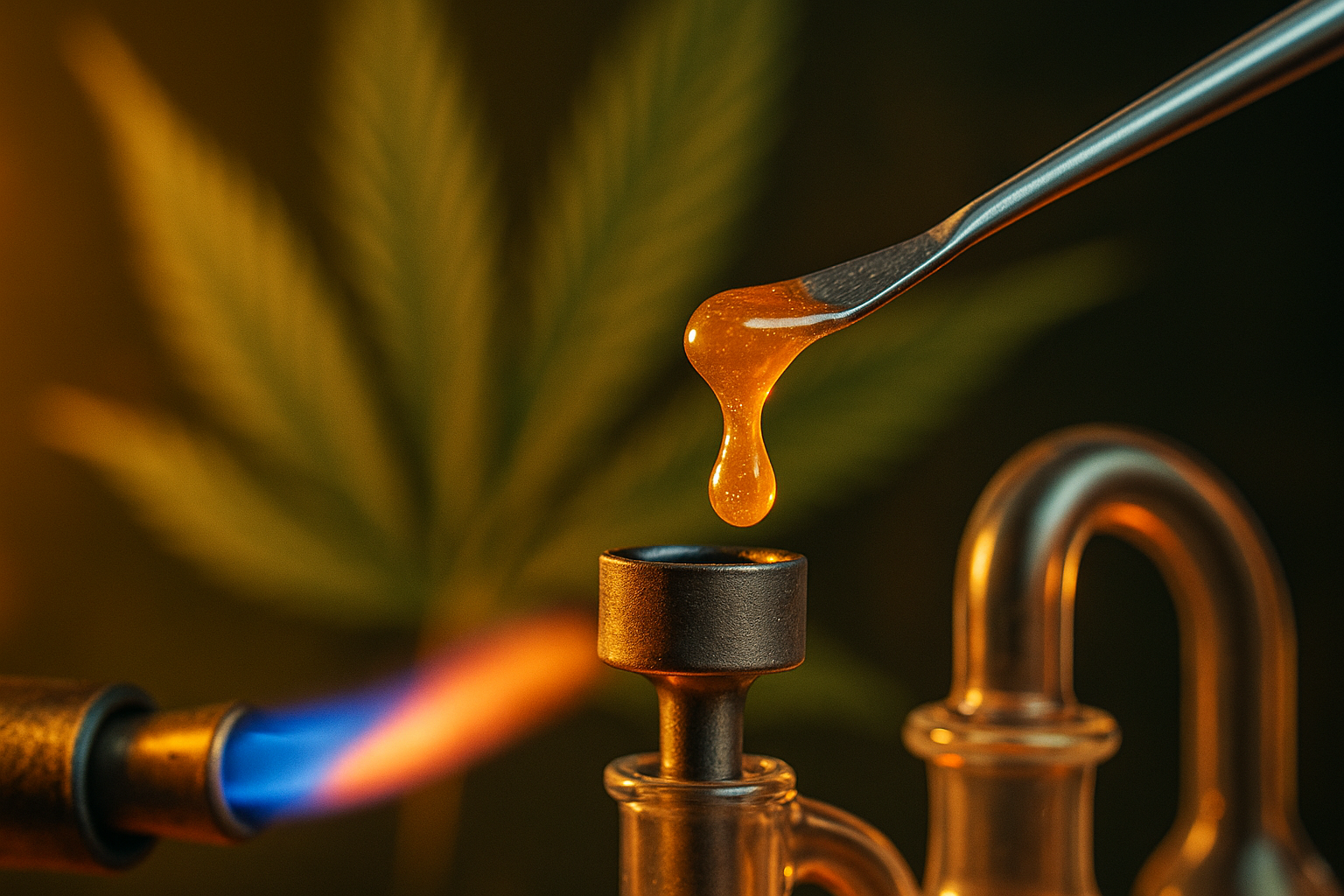
Banger temperature determines how cannabis concentrate vaporizes. At low temperatures (350-450F) the terpenes – the volatile aromatic compounds responsible for flavour and much of the experiential effect – vaporize cleanly while cannabinoids like THC also convert into vapor form. At high temperatures (550-700F) the entire concentrate flashes into vapor instantly, but many terpenes combust into char and lose their distinctive flavour. The cannabinoid content vaporizes either way; the question is how much of the terpene profile survives.
Why does temperature matter for terpenes?
Each terpene has a specific boiling point:
- Myrcene: 334F
- Limonene: 349F
- Pinene: 311F
- Linalool: 388F
- Caryophyllene: 320F
- Humulene: 388F
Above 450F, most terpenes oxidize or combust rather than vaporize cleanly. The unique pine-citrus-floral fingerprint of a strain disappears. Above 600F you are inhaling burned plant resin instead of the engineered flavour profile the extractor created. For high-quality live rosin or HTFSE, that loss is the entire point of paying premium.
What is the sweet spot temperature?
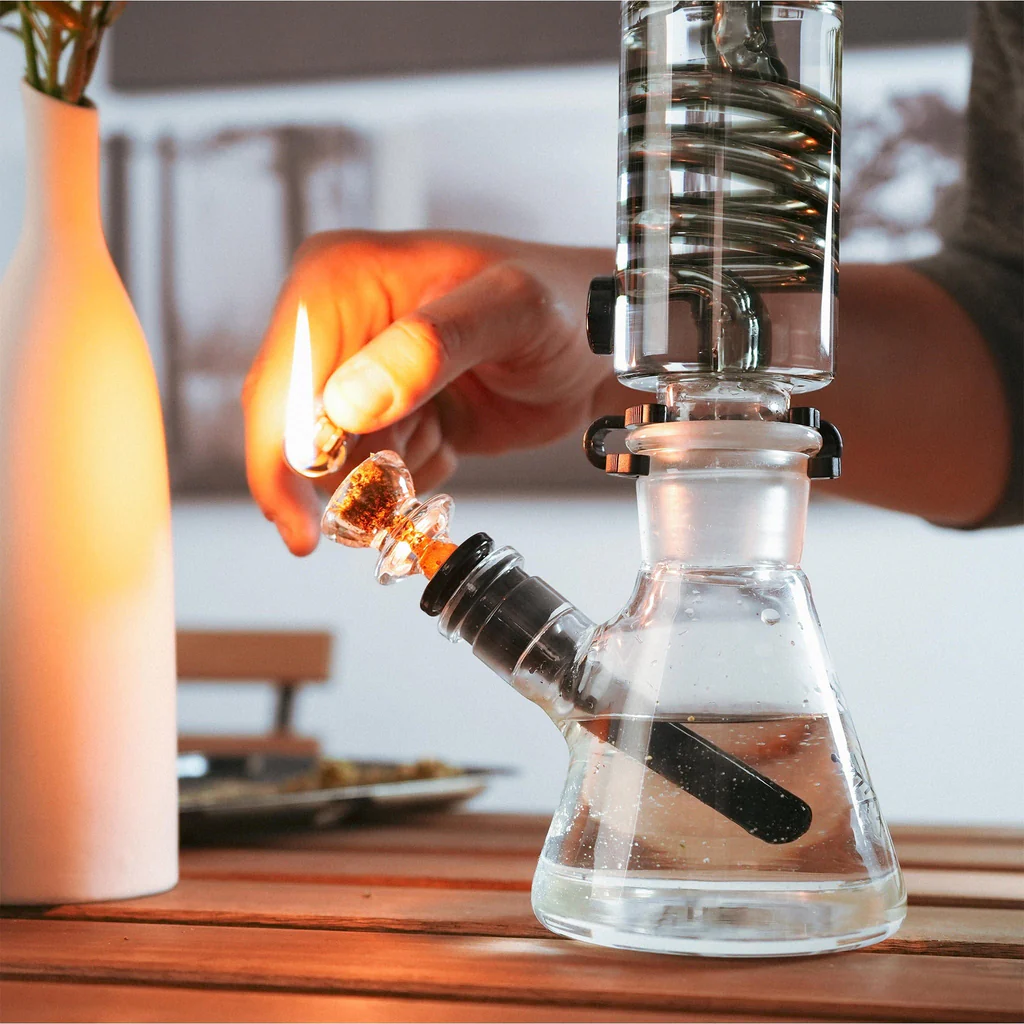
The widely accepted optimal range is 400-450F:
- 400F: terpene-forward, smoother on the throat, smaller clouds
- 425F: balanced flavour and cloud size
- 450F: bigger hits, slight flavour reduction
For live rosin: 380-420F preserves the full terpene profile. For shatter or distillate: 450-500F is fine – the terpene fingerprint is already weaker. For budder or sauce: 400-440F balances flavour and cloud size.
How do you measure dab temperature?
Three common methods:
- Infrared (IR) thermometer: most accurate, measures actual banger surface temperature
- Carb cap glass: visual cue when the carb cap pulls condensed vapor back into the banger
- Timer + heat memory: torch for X seconds, cool down for Y seconds
An IR thermometer is the cleanest approach. Heat the banger red-hot, then point the IR at the bowl surface. When it reads your target temperature, drop the dab. The cool-down method works but is less precise – banger thickness, quartz quality, and torch flame strength all change the timing.
How long should you wait after heating?
Standard cool-down times for a 4mm quartz banger:
- Red hot torch (~1500F): wait 45-55 seconds for 400F
- Red hot torch: wait 30-40 seconds for 450F
- Red hot torch: wait 20-25 seconds for 500F
- Red hot torch: wait 10-15 seconds for 550F+
Thicker bangers retain heat longer. A 6mm bottom banger needs an extra 15-20 seconds to drop from each temperature. A thin 2mm banger cools fast and is harder to dial in. The 4mm thermal-banger is the most forgiving for beginners.
How do you tell from the smoke if your temp is right?
Visual and taste cues:
- Low temp (under 400F): thin, slow vapor, intense flavour, possible puddle of unvaporized oil left behind
- Sweet spot (400-450F): medium cloud, full flavour, clean banger after
- High temp (500-600F): thick cloud, weaker flavour, charred residue on banger
- Too hot (650F+): instant flash, throat burn, blackened banger, headache risk
If you cough hard and your throat burns, you’re too hot. If the banger has a black residue that resists alcohol cleaning, you’re way too hot. Clean, clear banger after a dab means you nailed the temperature.
What concentrate works at what temperature?
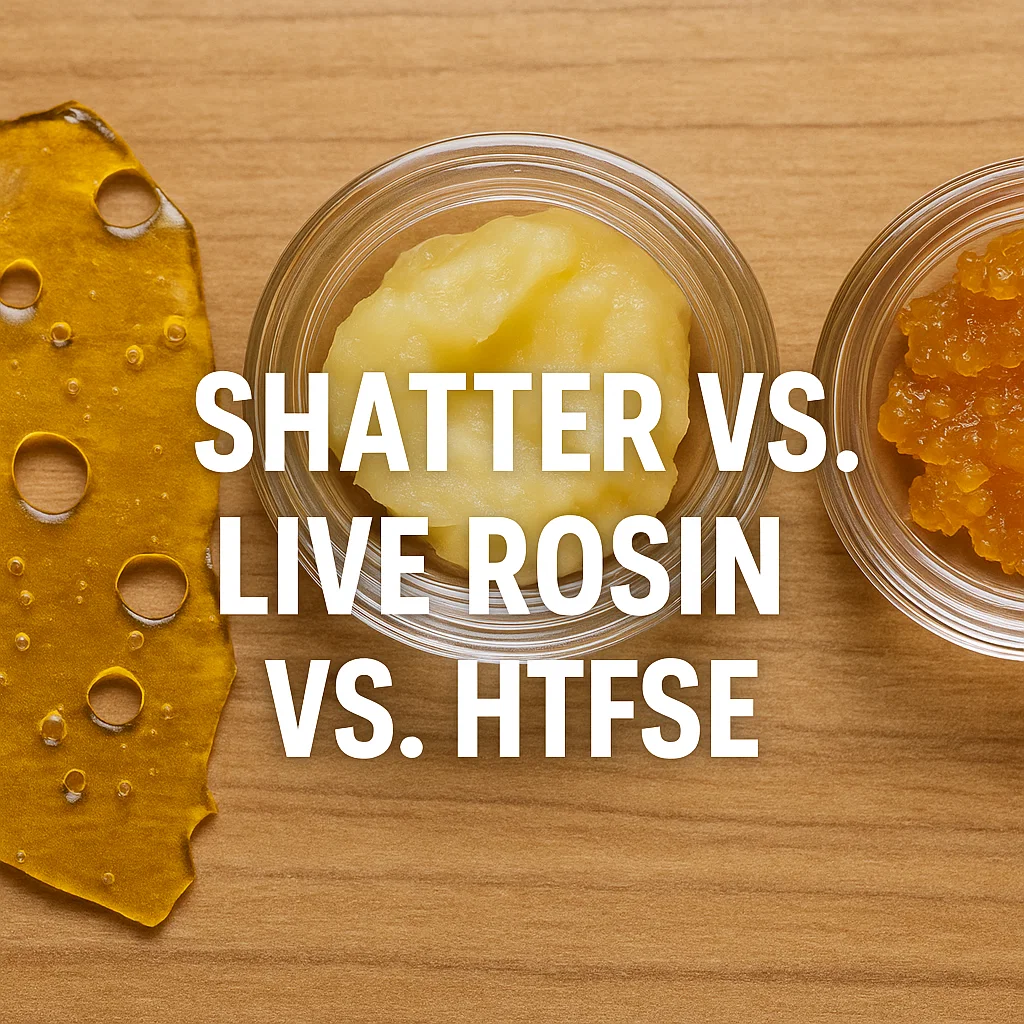
Match concentrate to temp:
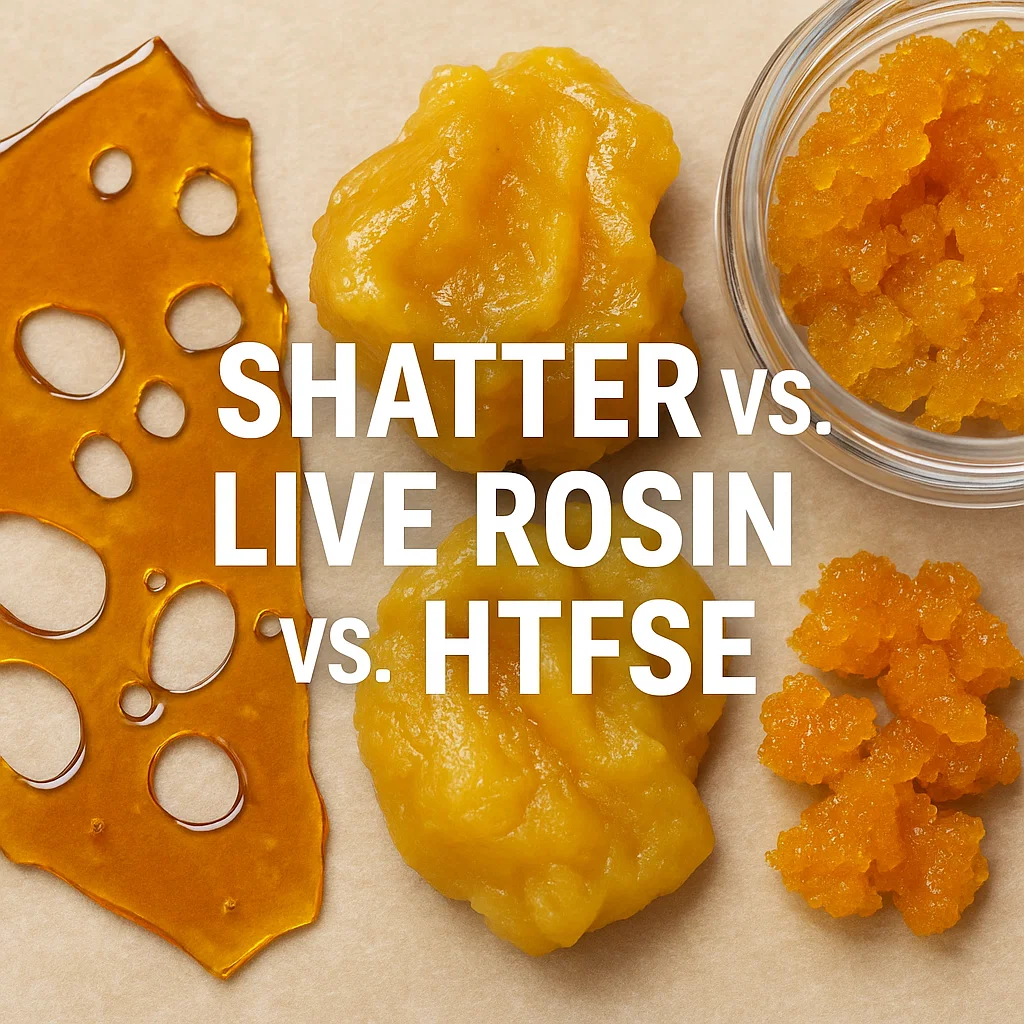
- Live rosin (premium): 380-420F – low temp protects the terpene work
- Live resin/HTFSE: 400-440F – similar to live rosin
- Budder/wax: 420-460F – medium range
- Shatter: 450-510F – more cannabinoid-focused, less terpene-sensitive
- Distillate: 480-540F – terpenes are largely already gone
- THCa diamonds (alone): 500-560F – crystalline cannabinoid, no terps
- THCa diamonds + sauce: 420-460F – protect the sauce terps
Our concentrate lineup covers products across this range. Pick your temperature to match what you’re dabbing.
What carb cap should you use?
Carb caps trap heat and air pressure inside the banger:
- Bubble cap: pulls oil to the centre, even vaporization
- Directional cap: spins the oil for full banger coverage
- Spinner cap: pearls + cap, maximum vaporization at low temps
Low-temp dabs almost require a carb cap. Without one, the oil sits in a puddle and vaporizes inefficiently. A spinner cap with terp pearls is the sweet spot for 400F live rosin dabs – it forces every drop of oil to contact the hot quartz surface.
Does temperature affect THC absorption?
Modestly:
- Low-temp dabs vaporize 90-95% of available THC if oil contacts banger fully
- High-temp dabs vaporize 95-100% but burn off 5-10% of THC as combustion byproducts
- The net cannabinoid intake is roughly the same
What differs is the byproduct profile. High-temp combustion produces benzene, toluene, and other compounds the lungs don’t enjoy. Low-temp vaporization produces almost none of these. The harm-reduction case for low-temp dabs is real even if the immediate high feels similar.
Is low-temp better for harm reduction?
Yes, on every measurable dimension:
- Less combustion = less carbon monoxide and partial combustion products
- Cooler vapor = less throat and lung irritation
- Lower harshness = easier to take measured, smaller hits
- Better flavour = users dab less often
The dabbing harm-reduction guidance from researchers consistently recommends low-temp vaporization over high-temp combustion. Same cannabinoids in, fewer chemistry byproducts. Health Canada cannabis regulations.
Sources
- Russo EB. Taming THC: potential cannabis synergy and phytocannabinoid-terpenoid entourage effects. Br J Pharmacol, 2011.
- Meehan-Atrash J, et al. Toxicant formation in dabbing. ACS Omega, 2017.
- Andre CM, et al. Cannabis sativa: The plant of the thousand and one molecules. Front Plant Sci, 2016.
- Health Canada Cannabis Regulations, 2024.