

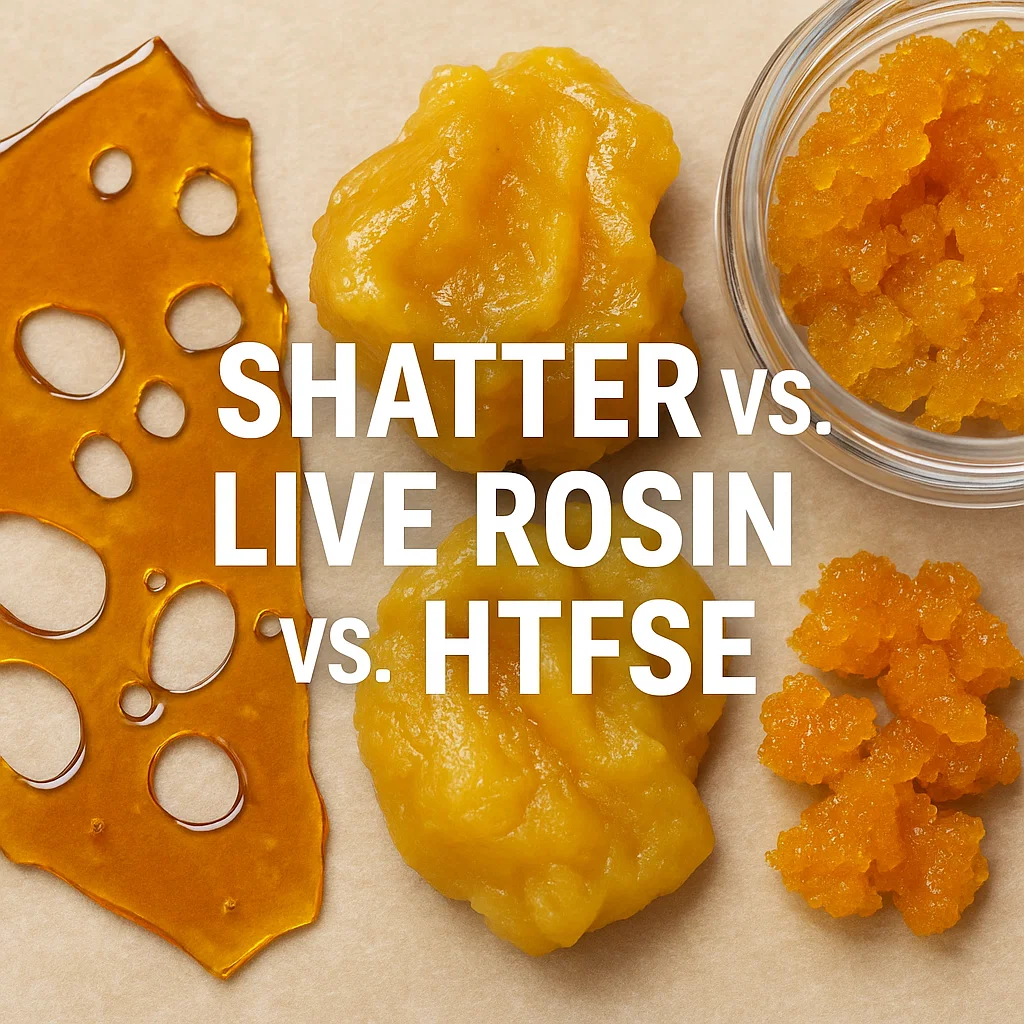
Shatter vs. Live Rosin vs. HTFSE: Which One’s Right for You?
Concentrates aren’t all chasing the same goal. Some are built for glass-clear snaps and long shelf life. Others are pressed for solventless purity and a butter-soft mouthfeel. And a few are engineered to flood your palate with terpene sauce at low temps. If you love flavor and want clean, reliable sessions, understanding the differences between shatter, live rosin, and HTFSE will save you money and dial in your ritual fast.
This guide breaks down how each format is made, how it tastes, what temperature it prefers, how it stores, and when to reach for one over the others—using NFCanna’s in-house, Soil-to-Oil lineup as real-world examples.
Three concentrate styles, three flavor experiences—pick the one that fits your ritual.
Quick definitions
Shatter: A hydrocarbon extract (bud-run in our case) purged into a glassy, snap-able sheet. Think clarity, potency, and stability with true-to-strain flavor. If you want clean classics, start with Classic Blueberry Shatter, Pure Endgame Shatter (Craft Bud-Run), or Classic Chemdawg Shatter (Limited Run). You can also browse the full Shatter and Top Concentrates categories.
Live Rosin: Solventless. Fresh or fresh-frozen flower is ice-water washed, the hash is collected (by micron), then pressed into rosin—no hydrocarbons involved. Flavor is loud, textures are soft, and low temps are king. Try Doho Cookies F3 Bubble Hash Rosin 73–120u. More solventless and terp-forward options live under HTFSE / Sap / Terp.
HTFSE (High Terpene Full Spectrum Extract): Hydrocarbon extraction refined into a syrupy, terpene-rich fraction (the “sauce”) with diamond-forming THCa separated or reintroduced. Expect dripping aromatics at very low temps, with that “fresh jar” nose in vapor form. Shop the broader HTFSE / Sap / Terp menu to see what’s in rotation.
How they’re made (and why it matters for flavor)
Shatter is about clarity and consistency. Bud-run input from the same rooms you’re smoking in flower gets extracted and purged until stable. Done right, it preserves the cultivar’s core notes with a clean, snappy finish. Because it’s a homogenous slab, each dab tastes consistent from first snap to last.
Live rosin preserves the plant’s most delicate aromatics by skipping solvents entirely. The tradeoff for that purity is labor and yield—solventless takes more work and often commands a higher price. In return, you get a soft, buttered mouthfeel and a spectrum of top notes that sing at 350–420°F.
HTFSE is “engineered loudness.” By separating and concentrating the terp fraction, you get a sauce that floods the palate at low temp. It’s the closest thing to opening a fresh jar and inhaling—except it translates in vapor. Texture can vary from runny syrup to jammy sap depending on the cultivar and processing.
Texture & handling
Shatter: Glassy, snappy sheet. Easy to portion with a tool. Minimal stickiness when cold. Travel-friendly.
Live Rosin: Batter, badder, or jammy. Ultra sticky when warm. Best kept cool and scooped with a flat tool.
HTFSE: Syrupy to jammy. Use a scoop or shovel tip. Keep upright; sauce will move at room temp.
Potency & “feel”
Potency is similar across formats once decarbed, but the feel differs because of terpene content and how gently you vaporize them.
Shatter: Clean, strong, straightforward. If you love classic profiles—chem, diesel, berry—bud-run slabs like Pure Endgame Shatter and Classic Chemdawg Shatter give you the archetypal experience of that strain with minimal fuss.
Live Rosin: Round, soft, and often “warmer.” The solventless mouthfeel and lower-temp sessions can feel less edgy while still potent. Doho Cookies Rosin is a good benchmark for that creamy, terp-deep hit.
HTFSE: Bright, expressive, vivid. If flavor itself is the goal, HTFSE can feel more “alive,” especially at very low temps. It’s the format you pick when you want the nose of a fresh jar to show up in the rig.
Temperature sweet spots
Lower temps = better flavor and less throat bite. Aim here and adjust to taste.
Shatter: 420–500°F. Start at ~450°F for balanced vapor density and flavor.
Live Rosin: 350–420°F. Many rosin fans live at ~380–400°F for silky clouds and terp integrity.
HTFSE: 330–400°F. “Sauce” is built for low-temp sipping—think 350–370°F to taste everything without sizzle.
Cap your banger promptly to keep vapor from escaping, and don’t chase red-hot—scorching wipes flavor across all formats.
Storage & shelf life
Shatter: Most stable. Keep cool and dark in parchment inside a jar or a silicone-lined case. Avoid pocket heat; it sugars faster in summer.
Live Rosin: Refrigerate (not freeze) in a sealed glass jar. Let it come to room temp before opening to avoid condensation. Gentle “cold cure” textures keep nicest.
HTFSE: Store upright in a sealed jar. Cool, dark storage slows terpene evaporation and keeps crystals submerged.
When to choose each
Pick shatter if… you want affordable, consistent dabs that snap clean, travel well, and mirror the flower you love. It’s great for everyday rigs, nectar collectors, and “set it and forget it” sessions. If you’re new to NFCanna concentrates, starting with Classic Blueberry Shatter or Pure Endgame Shatter gives you a true baseline for how our bud-run profiles taste.
Pick live rosin if… solventless purity and mouthfeel matter most, you prefer low-temp butter clouds, and you enjoy how different microns express in flavor. Doho Cookies F3 Bubble Hash Rosin 73–120u is a stellar “first jar” to understand the press-to-puff experience.
Pick HTFSE if… you want maximum terp saturation for minimal heat and short draws, or you’re chasing that “open the curing room” aroma in vapor form. Check the current HTFSE / Sap / Terp offerings and choose profiles you already love in flower.
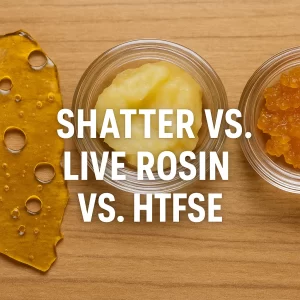
Shatter for stability, rosin for solventless purity, HTFSE for maximum terps.
Flavor benchmarking: tie it back to the plant
One easy way to choose is to follow a cultivar from jar to dab:
Love citrus-diesel flower like Zephyrus? Pair your jars from Craft Flowers with a terp-forward concentrate from HTFSE / Sap / Terp and run 350–380°F for a “fresh peel” hit.
Prefer dessert-leaning indicas like Barn Burner? A low-temp rosin dab after a bowl captures all that cream-vanilla depth without the heat sharpness. Round out the night with a measured edible if you’re going smoke-free later (see Edibles & THC Capsules such as the 250 mg THC Capsules or 500 mg THC Capsules – Nature’s Fire).
Old-school profile fan? Bud-run slabs like Classic Chemdawg Shatter are tailor-made for chem lovers who want the archetype, not a remix.
Rig setup tips (little things that change everything)
Keep it boringly clean. Dirty quartz erases the differences you’re paying for. After each dab, a quick swab with a dry cotton tip, then one lightly moistened with iso, keeps the next pull bright. Let the banger cool to an appropriate temp—if you’re counting, 25–40 seconds after the torch for most quartz, then fine-tune based on your piece and room temp.
Use the right tool for the texture:
Flat paddle for shatter snaps
Scoop/shovel for HTFSE
Short, wide spatula for rosin batter
Cap immediately and draw slow. You’re cooking, not incinerating.
Cost, yield, and value
Shatter tends to be the best value per gram because hydrocarbon extraction yields are high and consistent. If you’re a frequent dabber who values reliability and cultivar fidelity, it stretches the budget farthest.
Live Rosin is the most labor-intensive. You’re paying for hand-washed hash, selective micron collection, and careful pressing. If solventless matters to you—or your palate just prefers the soft, buttery feel—rosin earns its price in experience.
HTFSE sits between the two: yields can be strong, but not every strain sauces beautifully. When it does, you get that ultra-expressive nose that makes low-temp dabs feel luxurious.
Pairing ideas (make it a moment)
Shatter + sparkling water with citrus: keeps the palate clean so chem/diesel notes pop.
Live Rosin + dark chocolate: fattiness softens the swallow and extends the finish.
HTFSE + sliced berries: mirrors fruit esters and keeps temps low and sippable.
Common mistakes to avoid
Overheating: the fastest way to make everything taste the same. If your quartz is glowing, you’ve already lost the plot.
Under-storing: leaving lids loose or jars warm bleeds terps, especially in HTFSE.
Cross-contaminating tools: one sticky utensil across three textures smears flavors and invites dust.
Chasing clouds over flavor: thicker isn’t better—smoother is.
How NFCanna’s Soil-to-Oil approach helps
Because our flower is grown and cured in-house, the extracts track what you already love from the jar. That means bud-run shatter actually tastes like the cultivar it came from, live rosin reflects careful wash and press choices for that strain, and HTFSE lands at low temp with the same terp story you smelled in the dry room. It’s the easiest way to build a concentrate rotation you won’t regret.
If you want to explore side-by-side, start simple:
Pick one slab from Shatter (e.g., Classic Blueberry).
Pick one jar from HTFSE / Sap / Terp.
Pick one solventless like Doho Cookies Rosin).
Run them at their sweet spots for a weekend and take quick notes. By Monday, you’ll know your lane.
Bottom line
Choose shatter for daily reliability, clean snaps, and classic strain fidelity at friendly prices.
Choose live rosin for solventless purity, plush textures, and soft, low-temp clouds that highlight nuance.
Choose HTFSE when you want maximum terp expression in short, flavorful pulls at the lowest temps.
There’s no “best” for everyone—only the best for this mood and this session. Build your rotation around how you like to dab, keep your quartz clean, store jars cool and sealed, and let flavor—not flame—run the show.